Asgard’s Wrath 2 Launch Trailer
Slice of my Puzzle and Traversal Setup Work in Asgard’s Wrath 2.
Slice of my Combat and Encounter Setup Work in Asgard’s Wrath 2.
GAME BLURB: Travel across vast realms inhabited by the gods in pursuit of the Trickster God Loki, who threatens to undo the threads of the universe. It's up to you to battle gods and monsters alike as you take on one of the biggest and most epic scale Action RPGs ever experienced in VR. The sequel to one of the most critically-acclaimed VR games ever, Asgard's Wrath 2 is the massive VR adventure you've been waiting for.
Asgard’s Wrath 2
Asgard’s Wrath 2 is an action adventure Virtual Reality game released in 2023 on Oculus Quest 2 and 3. The game won Immersive Reality Game of the Year award at DICE awards 2024. Regarded as the largest VR game of all time with over 60 hours of gameplay.
I started working on the game in early production and shipped the game.
ROLE: Level Designer
PLATFORM: Meta Quest 2 and 3
TOOLS: Unreal Engine 4, Autodesk Maya
CONTRIBUTIONS TO THE PROJECT:
LEVEL DESIGN
Worked on the project throughout production to ship to take multiple linear narrative driven levels from blockout to ship.
Owned the design and implementation of multiple linear story levels and a large open exploration area, totaling 6+ hours of shipped content, using Unreal Engine 4 and Maya.
Partnered with art, narrative, and systems teams to drive levels from blockout through ship quality, ensuring performance and gameplay clarity.
ENCOUNTER DESIGN
Owned the design and implementation of tens of combat encounters throughout multiple large open exploration areas.
Designed and tuned complex combat arenas and encounters, focused on complex compositions to drive the narrative idea of a challenging hellscape that the player has to escape from.
Asgard’s Wrath 2 Accolades Trailer
DUAT HUB - Exploration AREA (3+ Hours)
Focus: Exploration, traversal, puzzle design, combat encounters, progression gating
The Duat Hub is a large, interconnected exploration area that serves as the player’s first true entry into the Egyptian Underworld. It was designed as the final major exploration space in Asgard’s Wrath 2, and intentionally challenges the player to apply their full skillset—combat mastery, traversal mechanics, puzzle solving, and situational awareness—before progressing into the game’s final trials.
This hub connects multiple combat encounters, traversal challenges, optional rewards, and the gates leading to the Silent Caverns trial levels.
Duat hub level - The Egyptian Underworld. A major level I primarily owned with several hours of gameplay.
Design Goals
The core goals for the Duat Hub were:
Create a high-challenge exploration space that tests all player abilities unlocked so far
Encourage curiosity-driven exploration with meaningful rewards
Balance combat, traversal, and puzzles without letting any single pillar dominate
Establish a strong sense of place and narrative tension as the player enters Egyptian hell
Because this was the last exploration area in the game, difficulty, readability, and pacing were tuned assuming a highly skilled player.
Level Structure & Player Flow
The Duat Hub was structured around a central landmark (the Tower) with multiple branching paths that loop back into the main space. Each branch introduces a different gameplay focus:
Traversal-forward routes that test movement and spatial reasoning
Puzzle-centric setups that require understanding companion abilities and tools
Combat encounters that escalate enemy composition and arena complexity
Critical progression paths are clearly readable, while optional routes reward deeper exploration with loot, upgrades, and narrative beats.
I focused heavily on sightlines, vertical layering, and return paths to ensure players always felt oriented, even when tackling non-linear objectives.
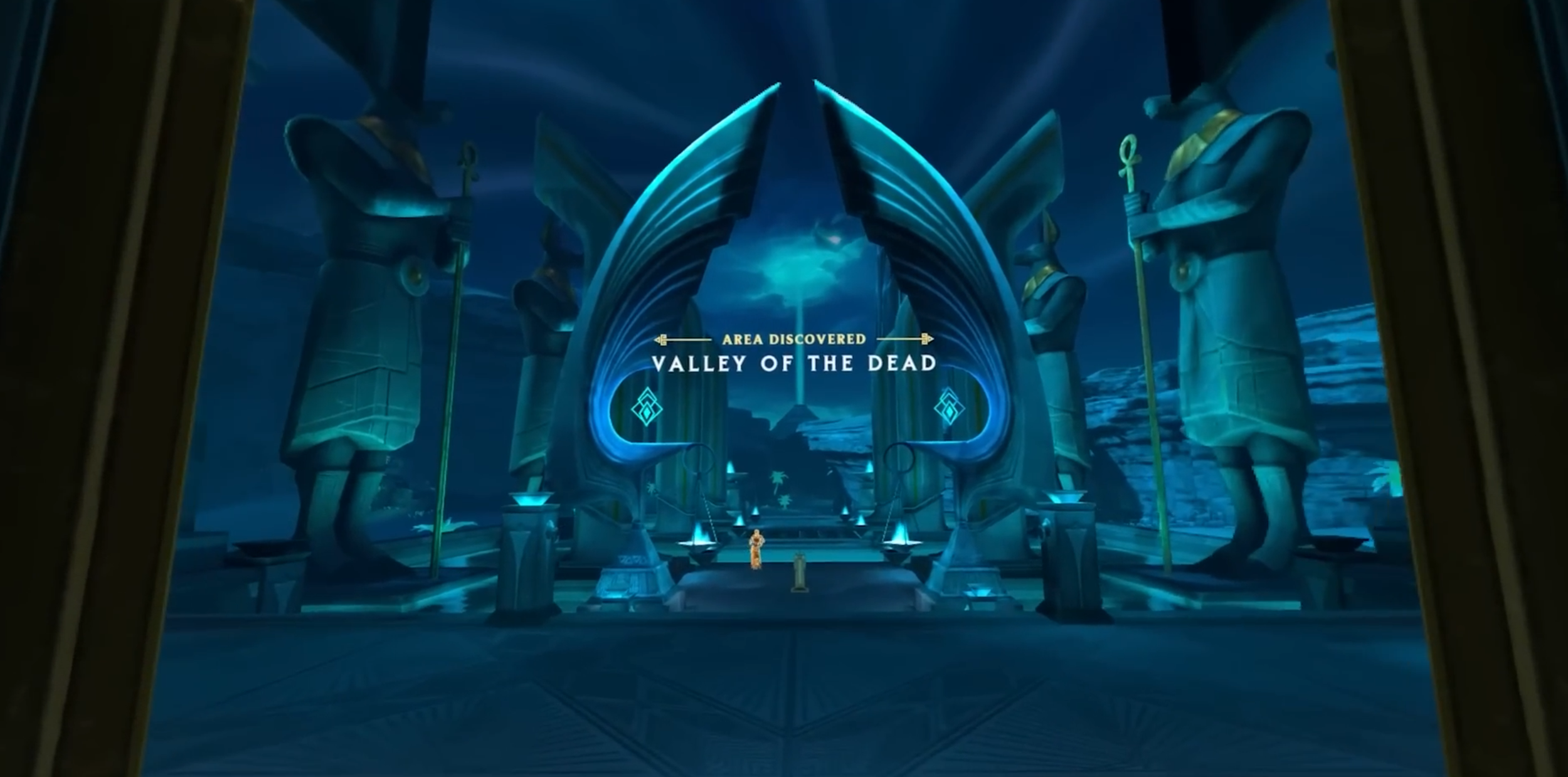
Upon entering the hub area, you are greeted by the view of a beam of light which will serve as the guiding landmark for the entire exploration space.
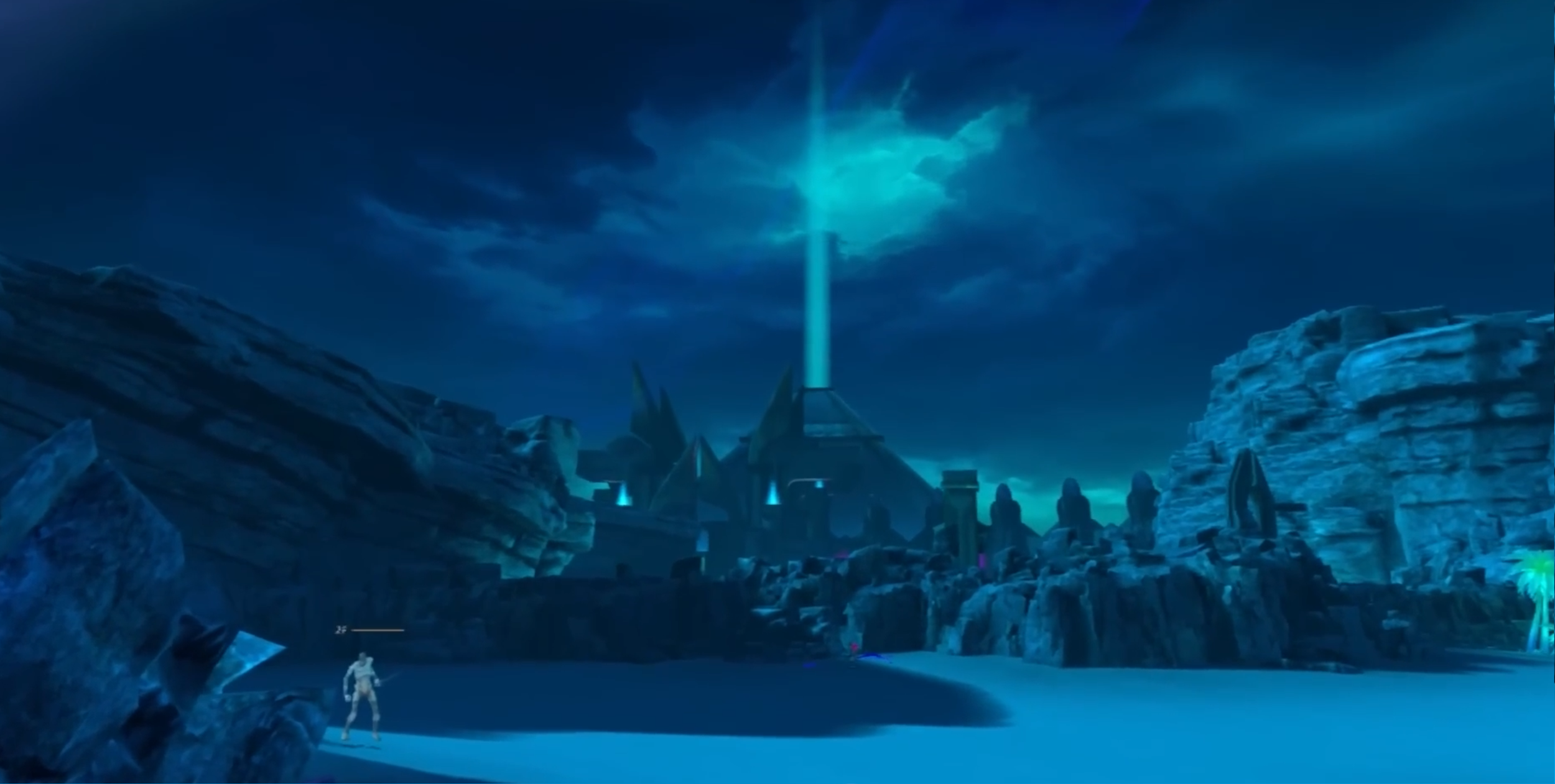
Another POI view of the pyramid on the lake of fire.
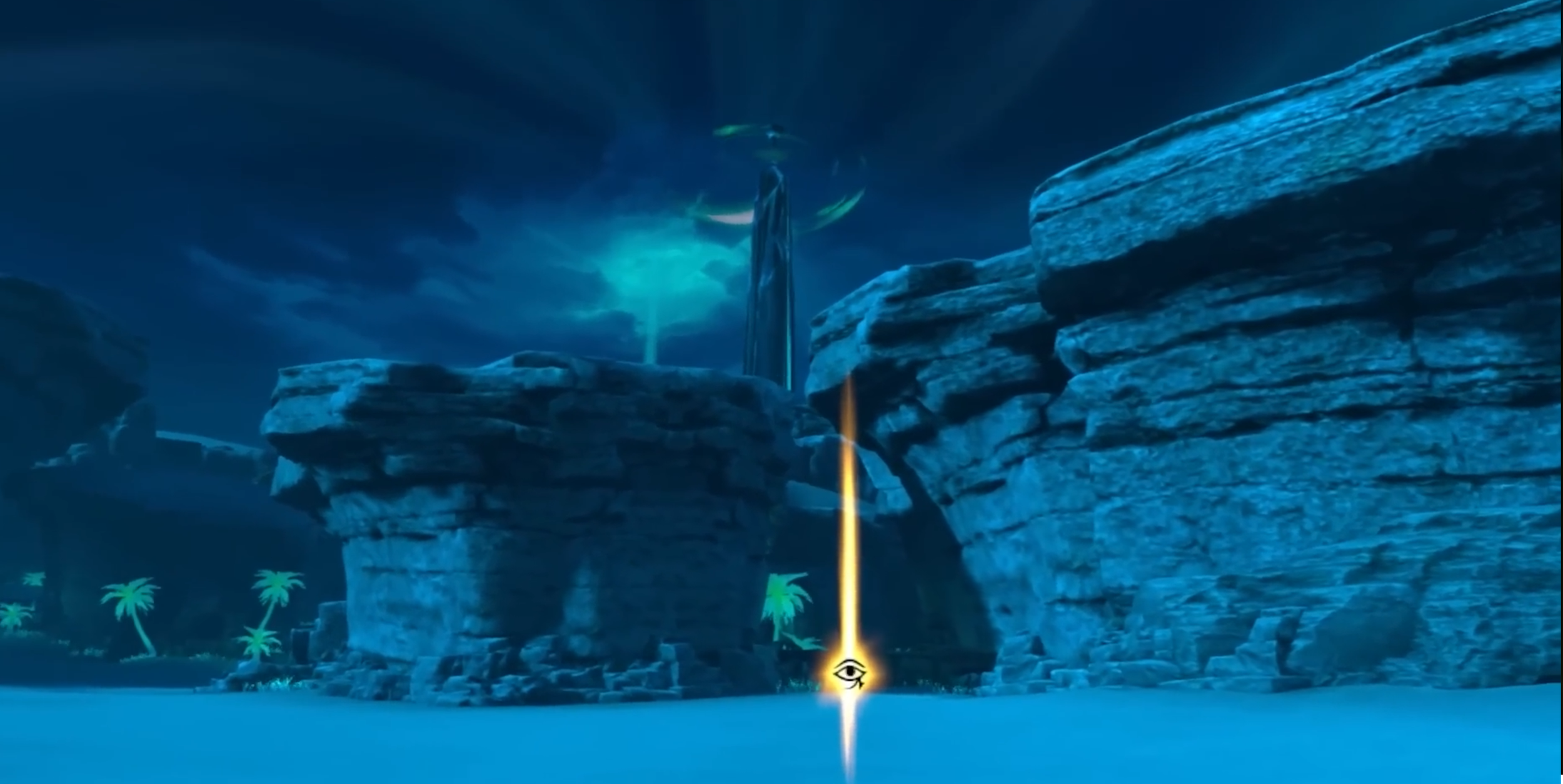
View of the Tower landmark from around the level.
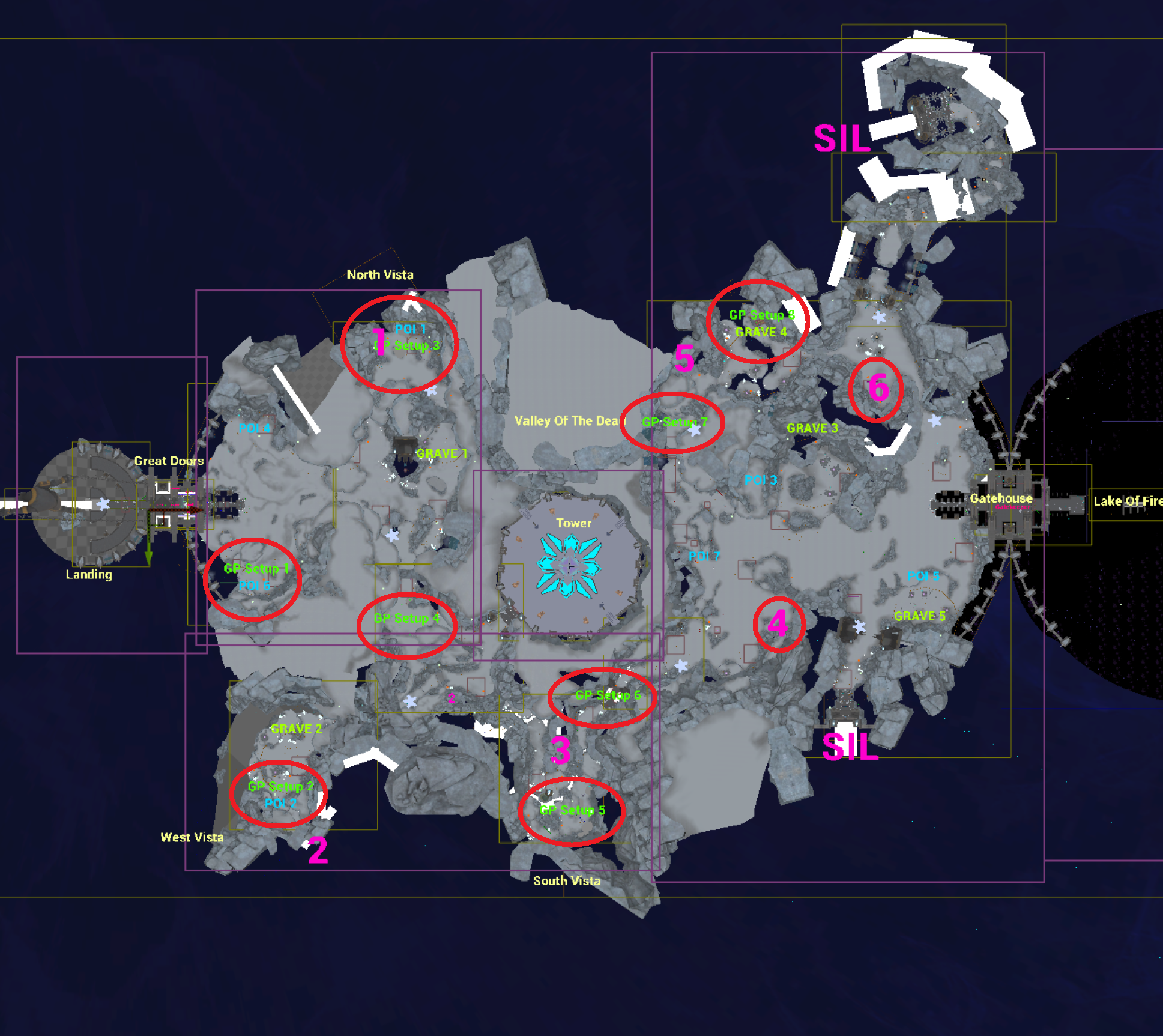
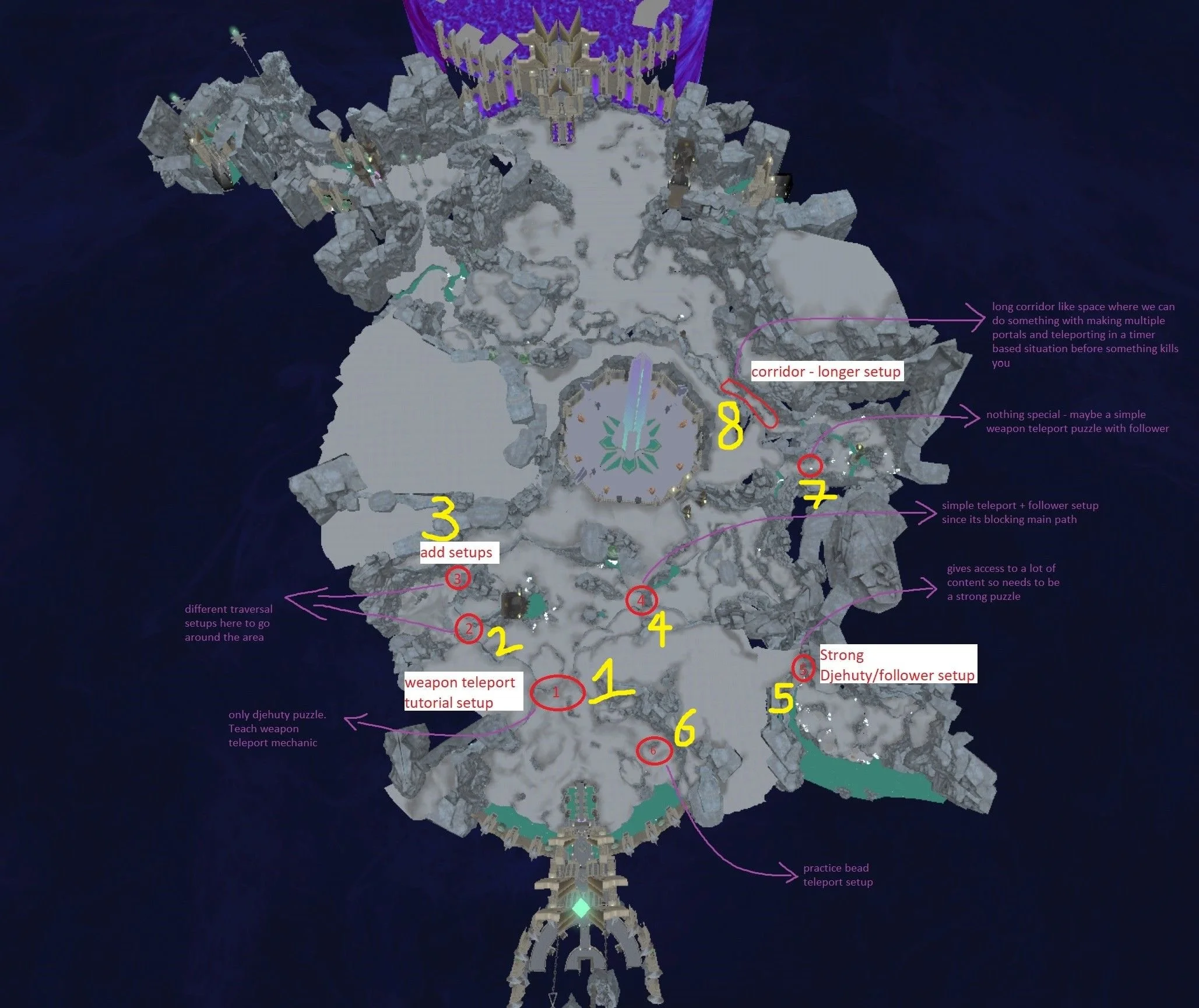
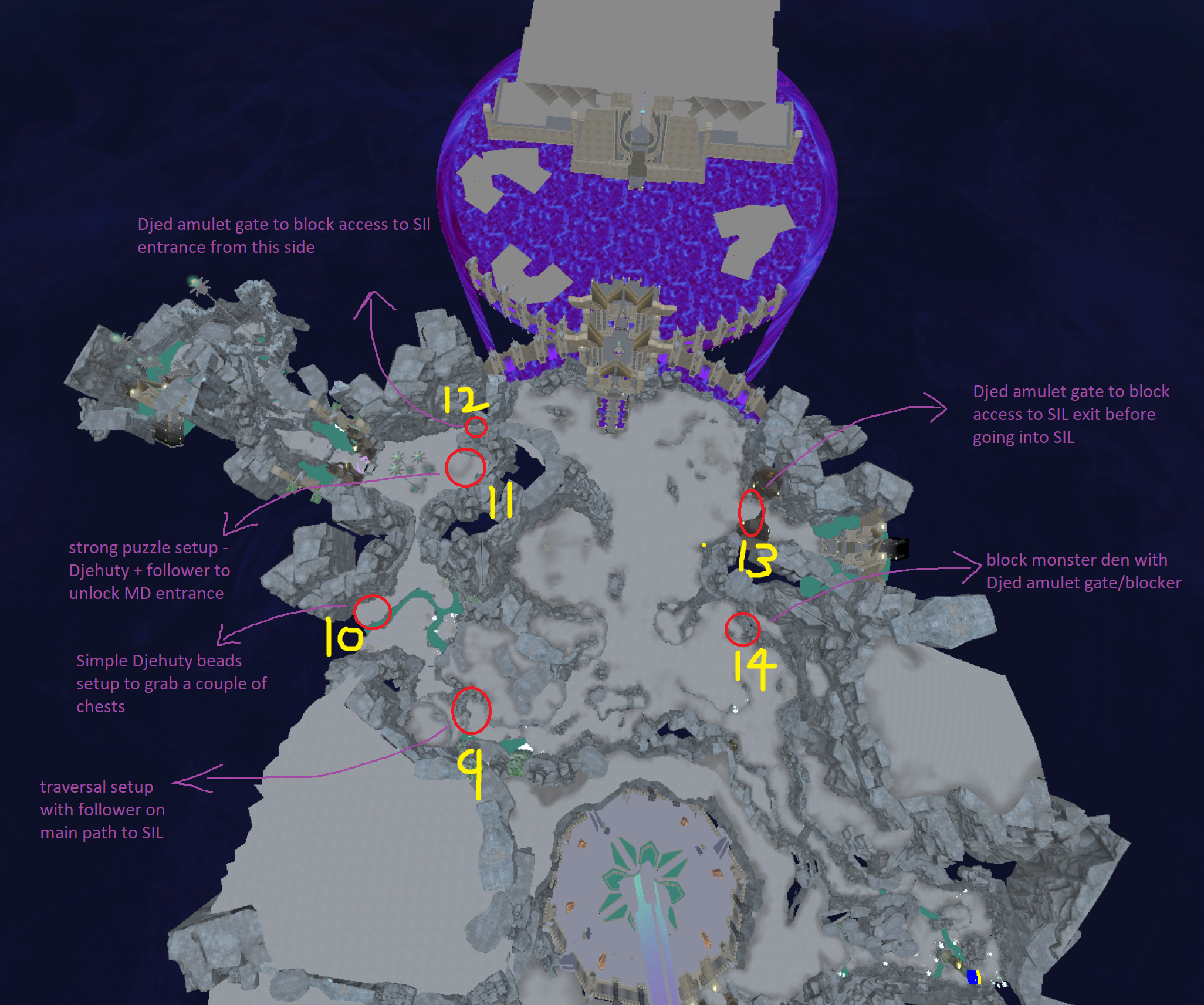
Top down map showing pacing of different gameplay setups around the entire hub.
Traversal, Puzzle & Combat Integration
A major challenge was ensuring that traversal, puzzles, and combat interlock naturally rather than feeling like isolated beats.
Examples of design integration include:
Traversal routes that double as combat arenas when ambushed
Puzzle solutions that unlock combat advantages or alternate encounter flows
Companion-based mechanics that gate progression while reinforcing mastery
Many setups were intentionally designed to teach through execution, allowing players to apply previously learned mechanics in new combinations rather than introducing new rules late in the game.
Difficulty & Progression
Since the Duat Hub appears late in the game, encounter difficulty was tuned to:
Assume full player kit mastery
Push enemy density, spacing, and sequencing
Require spatial awareness and positioning rather than raw damage output
Progression gates ensure that players engage with the hub’s core challenges before accessing the Silent Caverns trials, reinforcing a sense of earned advancement.
Outcomes & Learnings
The Duat Hub successfully served as:
A capstone exploration space
A skill-check for traversal, combat, and puzzle systems
A narrative bridge into the final bodd sequence
From a design perspective, this level reinforced the value of:
Clear spatial readability in non-linear environments
Reusing mechanics in escalating combinations rather than adding late-game complexity
Designing exploration rewards that feel meaningful, not optional filler
Silent Caverns — Linear Story Level (45 Minutes)
Focus: Linear progression, combat encounters, traversal gating, narrative pacing
Silent Caverns is a tightly authored, linear story level set deep within the Egyptian underworld. It represents the player’s trial by Anubis, both narratively and mechanically, and was designed to push combat mastery through a sequence of escalating challenges.
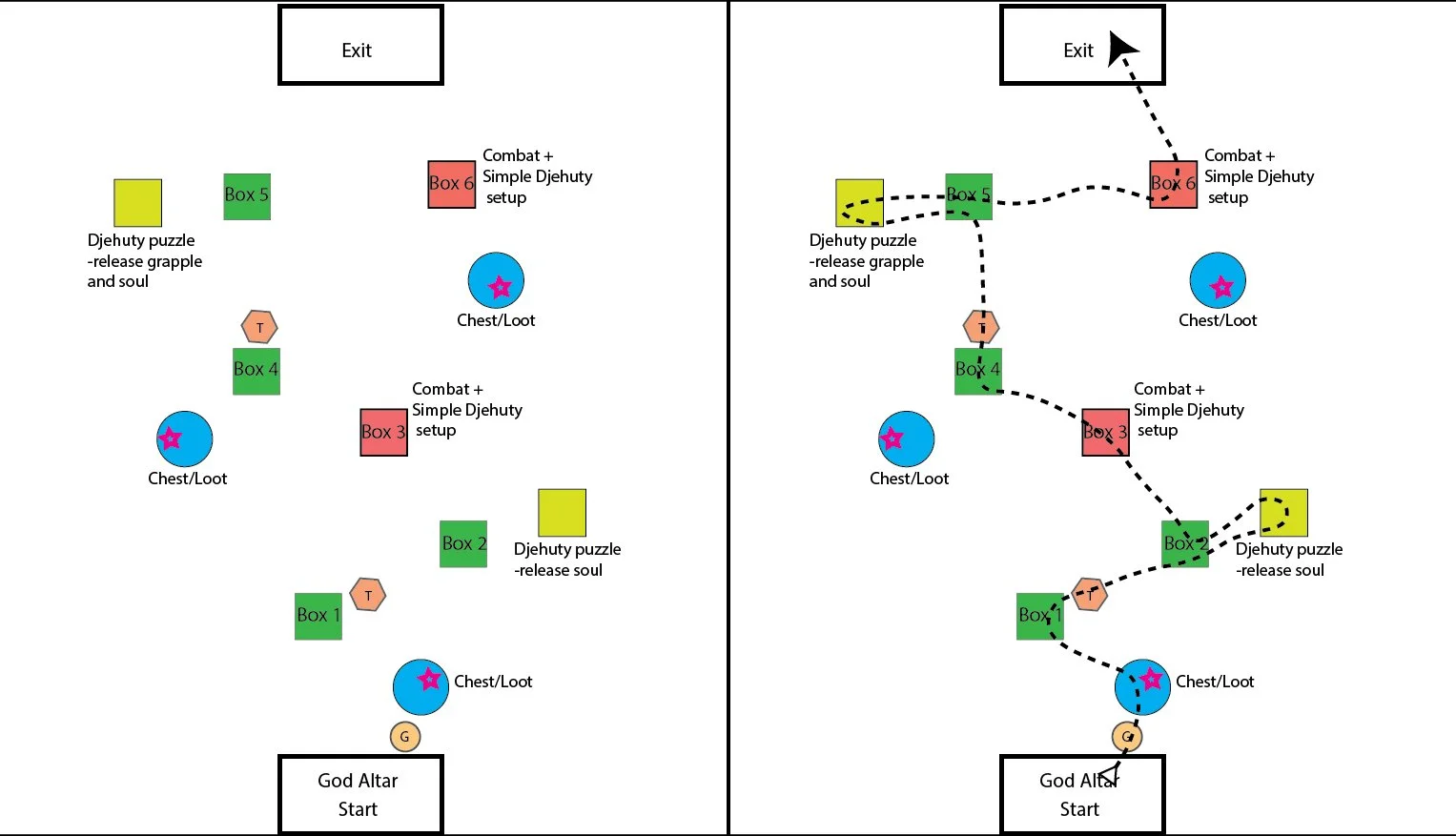
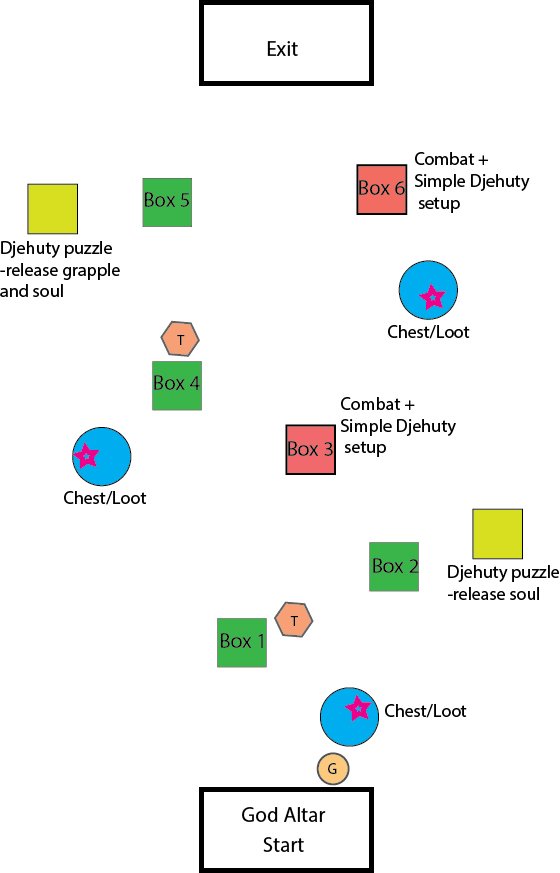
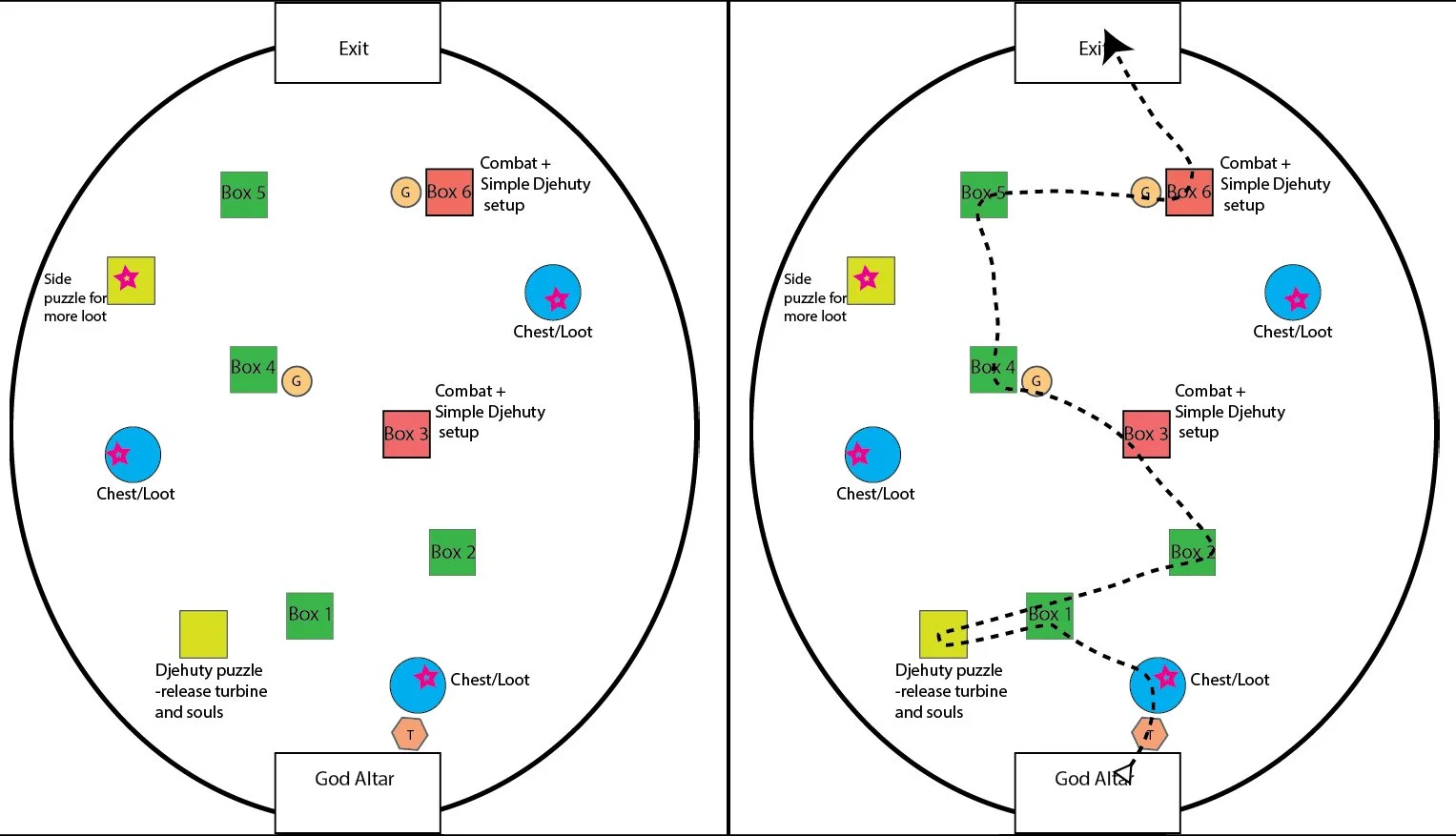
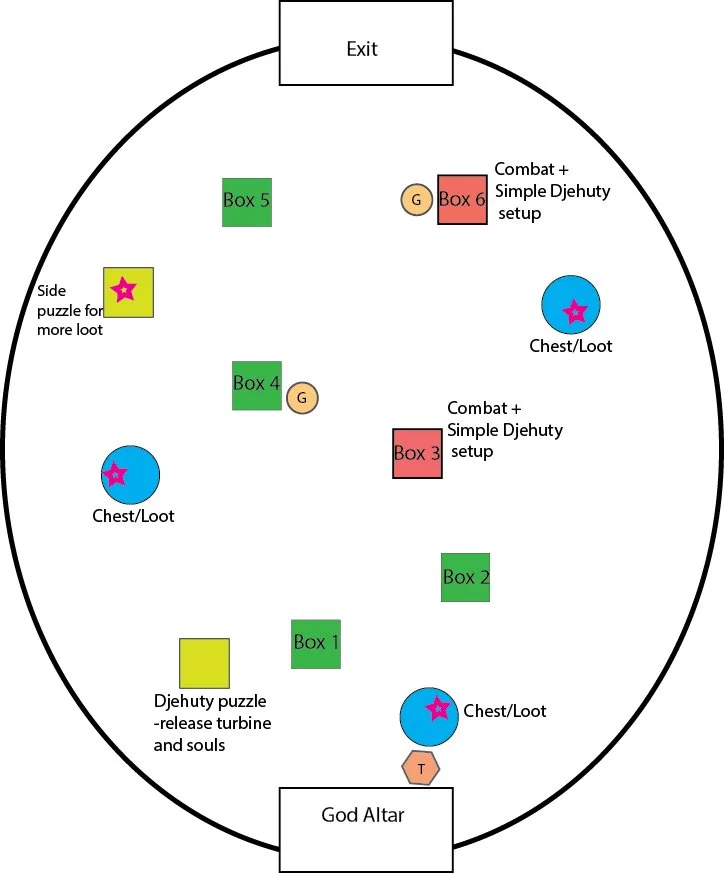
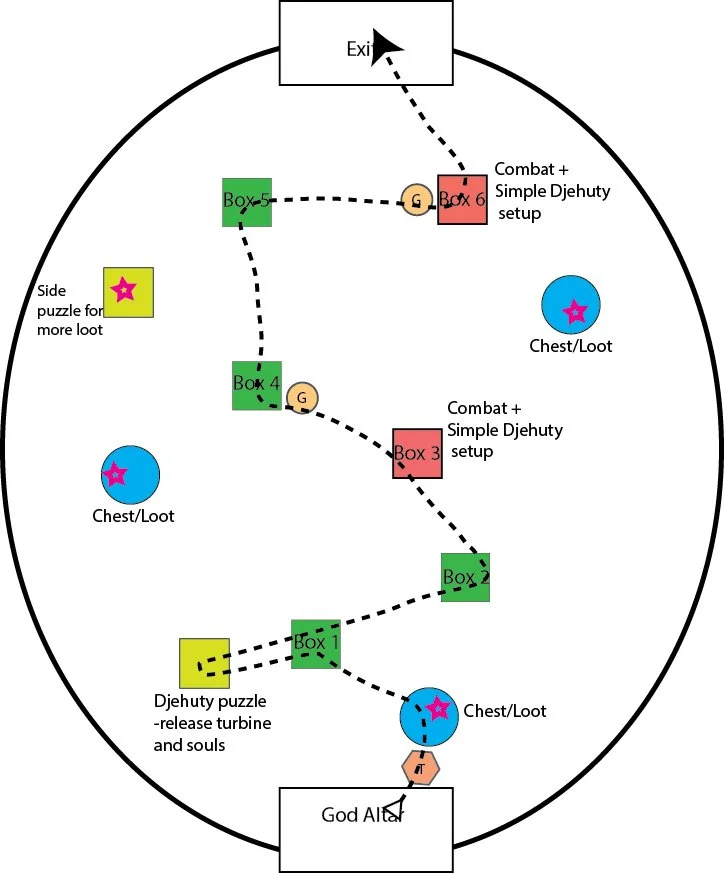
The level is structured as six distinct trials, each combining traversal, puzzle solving, and high-intensity combat encounters.
Narrative & Design Intent
Narratively, Silent Caverns tells the story of the player’s descent into Egyptian hell and their progression through Anubis’s trials. Design-wise, the goal was to create a focused, pressure-driven experience that contrasts with the open exploration of the Duat Hub.
Key goals included:
Deliver a highly controlled, linear experience with strong pacing
Test the player’s combat proficiency under evolving conditions
Gate combat encounters behind traversal and puzzle challenges to create rhythm and tension
Make each trial feel earned and distinct
Silent Caverns critical path level. An hour long combat based level on the critical path that I took from start to finish.
Level Structure & Trial Gating
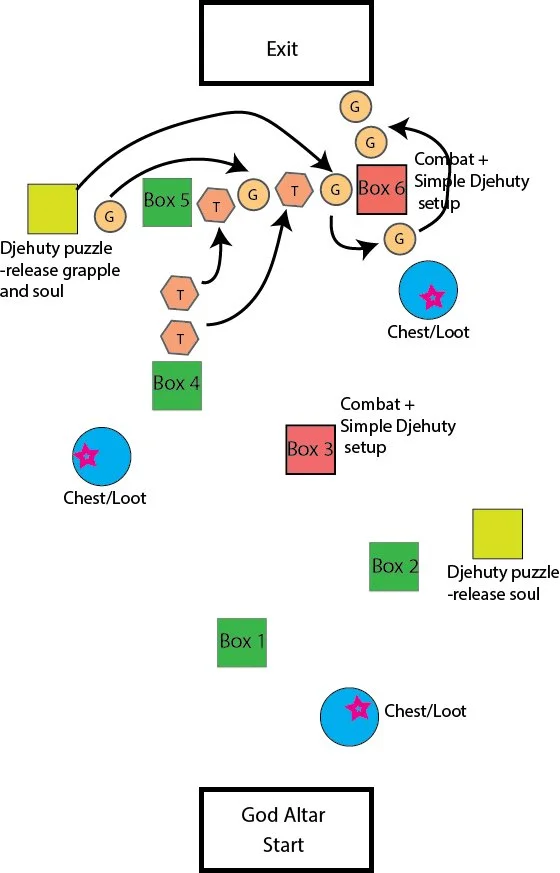
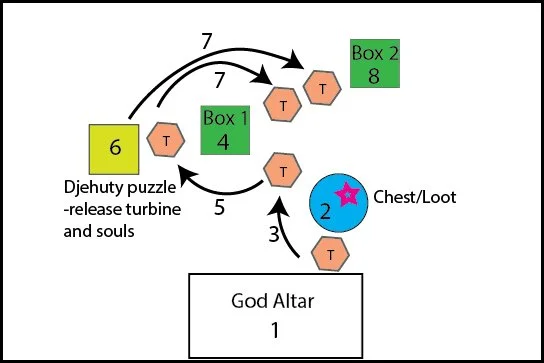
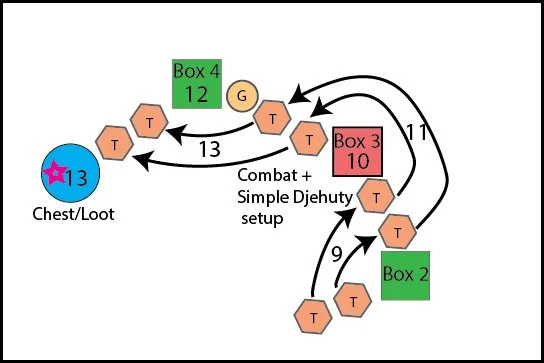
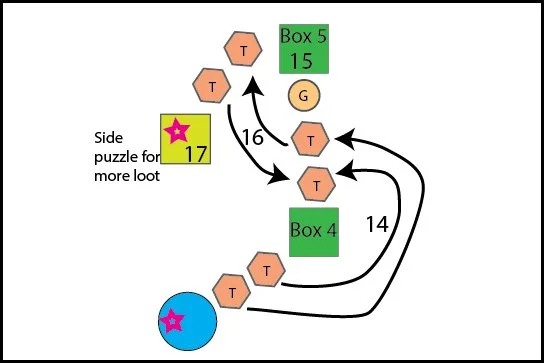
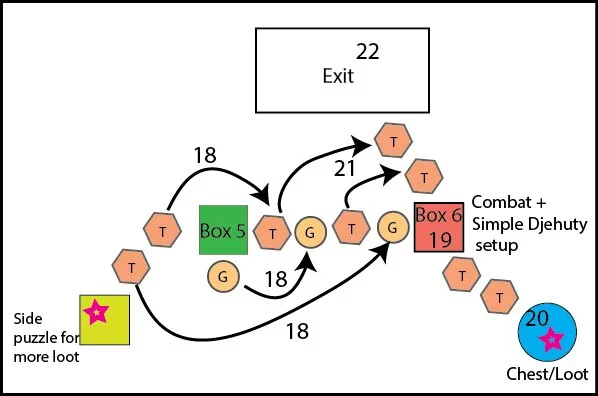
The level is composed of six major trial spaces (“boxes”), connected linearly. Each trial is gated behind a traversal and puzzle challenge, ensuring that combat beats are spaced and contextualized rather than continuous.
This structure allowed:
Clear separation between challenge types
Mental resets between intense combat encounters
Escalation of difficulty across trials
Traversal and puzzle gates were designed to reinforce mechanics already taught earlier in the game, preparing the player mentally before each combat trial.
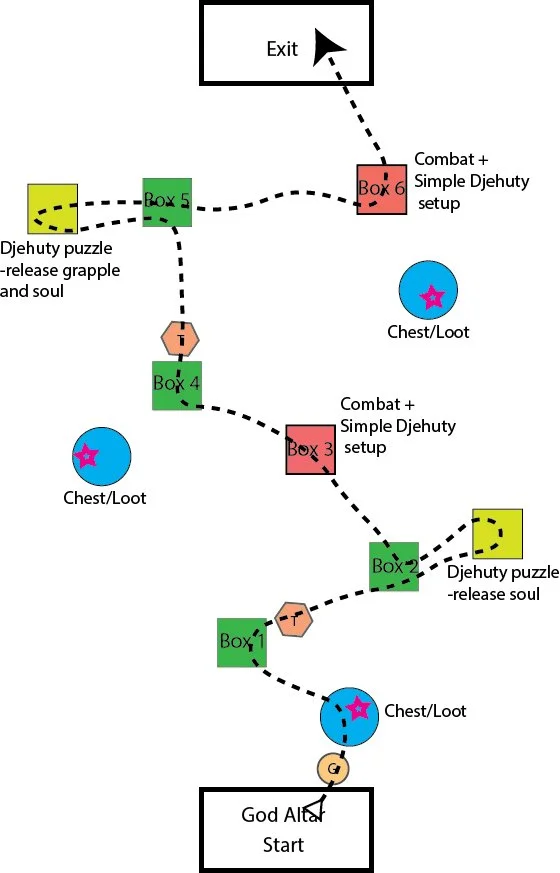
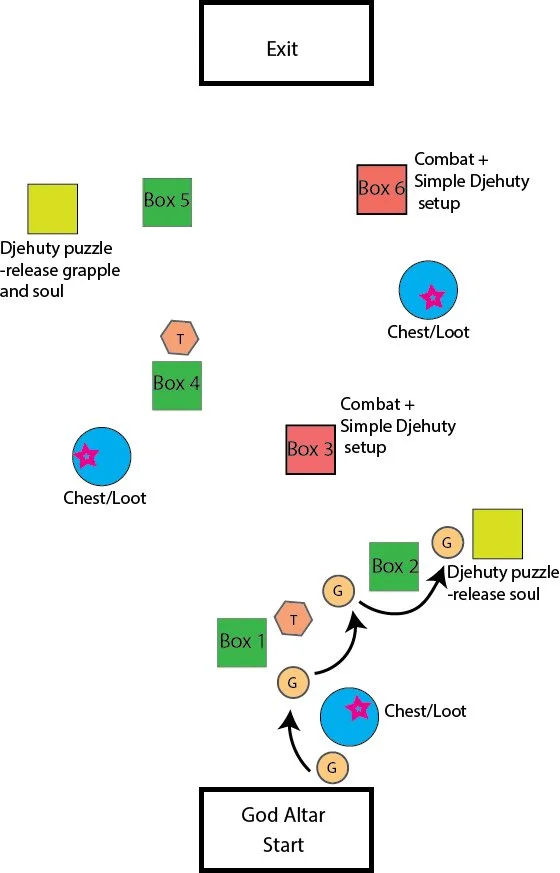
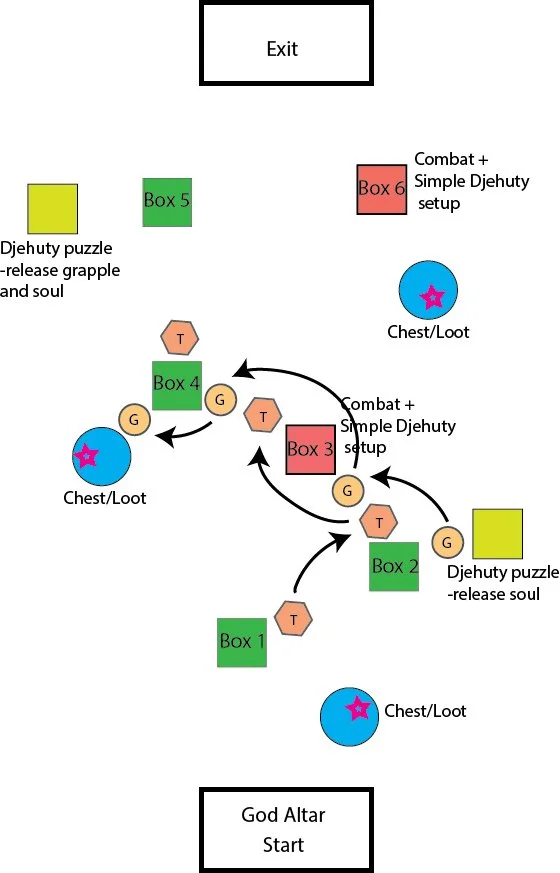
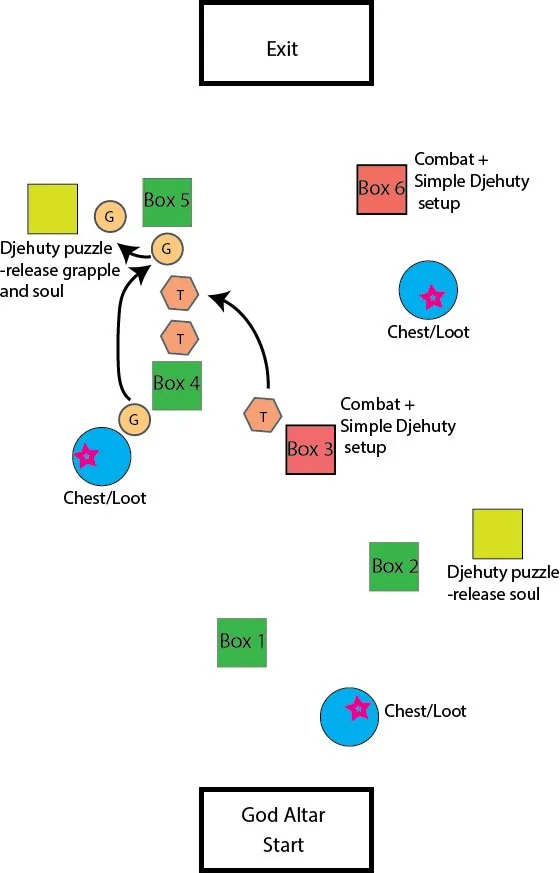
Combat Encounter Design
Each of the six trials centers on a challenging combat encounter, with arenas designed to actively evolve during the fight.
Key combat design considerations:
Encounters span 4–6 enemy waves per trial
Enemy composition escalates both within a trial and across the level
Wave transitions introduce new spatial constraints or opportunities
Combat was tuned to reward:
Positioning and spatial awareness
Efficient use of abilities and companions
Adaptation to changing arena layouts
Arena Evolution & Wave Design
A defining feature of Silent Caverns is that each combat wave alters the arena in meaningful ways. Environmental changes force players to continuously re-evaluate positioning, movement, and tactics rather than relying on static strategies.
This approach:
Prevents combat from feeling repetitive
Keeps tension high across long encounters
Reinforces the idea of Anubis actively testing the player
Arena changes were intentionally readable and telegraphed to maintain fairness while still demanding mastery.
Difficulty, Pacing & Player Mastery
Silent Caverns was designed assuming a high-skill player who has access to most core mechanics. Difficulty ramps steadily across the six trials, with later encounters requiring near-complete mastery of combat systems.
Pacing was carefully tuned by:
Alternating traversal, puzzle, and combat beats
Allowing brief moments of recovery before escalating encounters
Structuring trials to feel climactic without overstaying their welcome
The result is a level that feels intense, deliberate, and purposeful from start to finish.
Outcomes & Learnings
Silent Caverns successfully functions as:
A narrative centerpiece for the Egyptian underworld arc
A combat skill check for late-game players
A contrast to open exploration spaces elsewhere in the game
Key design takeaways included:
Evolving arenas significantly increase encounter depth without adding new mechanics
Traversal and puzzles are effective tools for pacing combat-heavy content
Linear levels benefit from strong internal structure and clear escalation